


Globax news
Blog
Air Freight vs Sea Freight: Cost, Speed & Best Option for UK Businesses
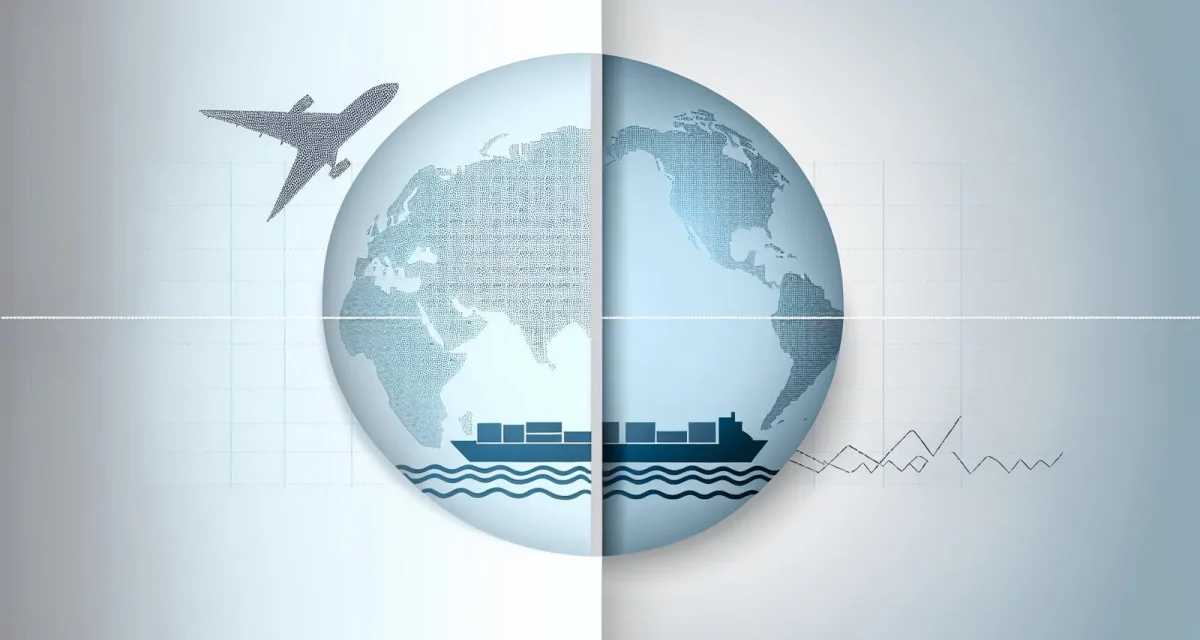
Freight transportation decisions directly affect supply chain performance, customer delivery expectations, inventory availability, operating margins, and long-term business scalability. For UK importers, exporters, e-commerce brands, manufacturers, and procurement teams, selecting between air freight and sea freight is not simply a transportation choice. It is a strategic operational decision that impacts every stage of the supply chain.
Many businesses initially focus only on shipping cost. Experienced logistics managers evaluate a much broader set of operational factors including lead times, customs processing risks, packaging for shipping requirements, warehouse handling capabilities, carrier reliability, fuel surcharges, cargo security, and inventory carrying costs.
Air freight provides speed and flexibility for urgent or high-value cargo, while sea freight supports large-scale global trade with lower transportation costs. However, the wrong freight mode selection can create inventory shortages, warehouse congestion, customer delays, damaged goods, and significant financial losses.
This guide explains how air freight and sea freight operations actually work in real supply chain environments, including route planning, carrier negotiations, customs documentation, logistics packaging solutions, freight packaging standards, and distribution planning across the UK, Canada, and US markets.
Understanding Air Freight Operations
Air freight is commonly used for time-sensitive, high-value, lightweight, or perishable cargo requiring rapid transportation across international markets.
How Air Freight Logistics Works
The operational flow for air freight generally includes:
- Supplier cargo preparation and packaging
- Export customs documentation
- Airport cargo acceptance and security screening
- ULD palletization and aircraft loading
- International air transportation
- Import customs clearance
- Last-mile transportation to warehouse or customer
Unlike ocean freight, air cargo involves highly controlled schedules, strict dimensional limitations, and intensive security compliance procedures.
Advantages of Air Freight
- Fast international transit times
- Lower inventory holding costs
- Reduced warehousing requirements
- Lower risk of cargo theft during long transit periods
- Improved customer fulfillment speed
- Suitable for emergency replenishment
Limitations of Air Freight
- Significantly higher freight costs
- Limited cargo capacity
- Strict hazardous goods regulations
- Dimensional and weight restrictions
- Greater sensitivity to fuel price fluctuations
During peak retail seasons, businesses frequently experience capacity shortages due to increased passenger flight demand reducing available cargo space.
Understanding Sea Freight Operations
Sea freight remains the backbone of global trade. Most international commercial cargo between Asia, Europe, Canada, and North America moves through containerized ocean shipping networks.
How Sea Freight Logistics Works
Ocean freight operations involve several interconnected supply chain stages:
- Container booking with shipping line
- Cargo consolidation or full container loading
- Port drayage transportation
- Export customs clearance
- Terminal handling and vessel loading
- Ocean transit
- Destination port unloading
- Import customs clearance
- Rail or truck inland distribution
Sea freight planning requires close coordination between freight forwarders, ports, customs brokers, trucking companies, rail operators, and warehouse teams.
Advantages of Sea Freight
- Lower transportation cost per unit
- Ideal for bulk cargo and heavy shipments
- Scalable for high-volume imports
- More sustainable carbon footprint per ton
- Better suited for oversized cargo
Limitations of Sea Freight
- Longer lead times
- Port congestion risks
- Weather-related delays
- Higher inventory carrying costs
- Increased exposure to cargo damage from moisture and movement
Freight Cost Comparison Between Air and Sea Freight
Transportation cost analysis requires evaluating total landed cost rather than simply comparing freight invoices.
Businesses must account for:
- Transportation charges
- Customs duties
- Warehouse storage
- Inventory carrying costs
- Insurance
- Packaging costs
- Fuel surcharges
- Port handling fees
For many UK businesses, understanding full landed cost is essential for maintaining profit margins during volatile market conditions.
How Much Does Freight Shipping Cost in the UK? (2026 Price Guide)
When Air Freight Makes Financial Sense
Air freight may appear expensive initially, but experienced logistics managers often justify the cost under certain operational conditions:
- Stockout prevention for high-demand products
- Emergency production replenishment
- High-margin retail products
- Medical and pharmaceutical cargo
- Seasonal inventory requiring fast market entry
For example, missing a holiday retail sales window due to delayed ocean freight may generate larger financial losses than paying higher air freight charges.
When Sea Freight Is More Cost Effective
Ocean freight typically becomes the preferred option for:
- Bulk imports
- Heavy industrial goods
- Furniture and appliances
- Construction materials
- Long-term inventory planning
Businesses using stable forecasting models generally optimize margins through planned ocean freight schedules.
Logistics Packaging Solutions in Freight Operations
Packaging directly influences transportation cost, cargo protection, warehouse handling efficiency, and customs compliance.
Many companies underestimate how critical logistics packaging solutions are to successful freight operations.
Packaging for Shipping Requirements
Packaging for shipping must protect cargo against:
- Compression damage
- Vibration during transit
- Humidity exposure
- Temperature fluctuations
- Forklift handling impacts
- Container movement during ocean transport
Protective Packaging Materials Used in Freight
- Corrugated export cartons
- Wooden crates
- Foam inserts
- Shrink wrapping
- Pallet stretch film
- Moisture barrier liners
- Industrial cushioning systems
Improper packaging increases cargo claims, insurance disputes, customer dissatisfaction, and replacement costs.
Freight Packaging Standards
International freight packaging standards vary depending on cargo type and transportation mode.
Common compliance requirements include:
- ISPM-15 wood packaging regulations
- IATA dangerous goods packaging rules
- Hazmat labeling standards
- Weight distribution requirements
- Container loading stability standards
Failure to meet freight packaging standards may result in customs holds, rejected cargo, penalties, or refused carrier acceptance.
Shipping Cost Optimization Strategies
Experienced logistics managers rarely focus only on carrier rates. They optimize total transportation efficiency.
Load Optimization
Efficient pallet and container loading reduces:
- Unused shipment space
- Damage risk
- Transportation cost per unit
- Warehouse handling time
Poor load planning increases dimensional weight charges, especially in air freight operations.
Route Planning and Carrier Selection
Carrier selection decisions are influenced by:
- Transit reliability
- Damage history
- Fuel surcharge structures
- Port coverage
- Customs expertise
- Peak season capacity
Choosing the lowest-cost carrier often creates larger operational risks if service consistency is poor.
Contract Negotiation Considerations
Experienced procurement and logistics teams negotiate:
- Volume commitments
- Detention and demurrage terms
- Fuel surcharge caps
- Guaranteed equipment availability
- Service-level agreements
Customs Clearance and Cross-Border Logistics Challenges
Documentation Errors and Customs Delays
Incorrect customs documentation remains one of the most common causes of shipment delays.
Frequent documentation issues include:
- Incorrect HS codes
- Undervalued invoices
- Missing certificates of origin
- Improper commercial invoice details
- Incomplete packing lists
Customs delays may create warehouse congestion, missed retail deadlines, and storage penalties.
Canada-US Cross-Border Logistics Complexity
Cross-border freight between Canada and the US involves:
- Customs bond requirements
- FDA compliance for food products
- Agricultural inspections
- Broker coordination
- Trade agreement documentation
Even small paperwork errors can delay truck movement for several days at border crossings.
Warehouse Operations and Inventory Management
Freight mode decisions significantly influence warehouse planning and inventory management strategies.
Air Freight and Inventory Strategy
Companies using air freight often operate lean inventory models with:
- Lower warehouse storage requirements
- Faster inventory turnover
- Reduced safety stock levels
Sea Freight and Inventory Planning
Ocean freight requires more forecasting accuracy due to longer lead times.
Businesses typically maintain:
- Higher buffer stock
- Larger warehouse capacity
- Longer replenishment cycles
Warehouse Bottlenecks During Peak Seasons
During holiday demand surges, warehouses commonly experience:
- Inbound congestion
- Labor shortages
- Picking delays
- Trailer appointment backlogs
- Inventory misplacement
Poor warehouse coordination often creates more delivery delays than transportation itself.
Technology Systems in Modern Freight Management
Transportation Management Systems (TMS)
TMS platforms help logistics teams:
- Track shipments
- Optimize routes
- Manage carrier performance
- Analyze transportation spend
- Improve shipment visibility
Warehouse Management Systems (WMS)
WMS solutions support:
- Inventory tracking
- Warehouse slotting
- Labor productivity
- Barcode scanning
- Order accuracy
Problems Caused by Poor System Integration
Disconnected logistics systems create:
- Inventory inaccuracies
- Duplicate shipments
- Manual data entry errors
- Customer communication failures
- Delayed order processing
In-House Logistics vs Third-Party Logistics Providers
In-House Logistics Advantages
- Greater operational control
- Direct carrier relationships
- Customized workflows
- Internal process visibility
3PL Advantages
- Established carrier networks
- Scalable warehousing
- Lower infrastructure investment
- Cross-border expertise
Many businesses use hybrid models where strategic inventory remains internal while overflow distribution is outsourced to 3PL providers.
Relevant commercial services may include:
- Freight forwarding services
- Warehousing and fulfillment
- Distribution management
- Supply chain consulting
- Customs brokerage support
Sustainable Packaging Logistics and Environmental Pressures
Sustainability expectations are influencing freight and packaging decisions across UK, US, and Canadian supply chains.
Sustainable Packaging Logistics Considerations
- Reducing packaging waste
- Lowering dimensional weight
- Using recyclable materials
- Improving pallet utilization
- Reducing transportation emissions
However, sustainability initiatives must balance operational durability requirements.
Reducing protective packaging excessively often increases product damage rates and reverse logistics costs.
Real-World Operational Challenges in Freight Logistics
Port Congestion Disruptions
Major port congestion events create cascading supply chain delays.
Operational impacts include:
- Container shortages
- Demurrage penalties
- Missed warehouse appointments
- Retail stock shortages
- Production downtime
Driver Shortages
Driver shortages across the UK and North America continue affecting:
- Last-mile delivery performance
- Appointment scheduling
- Regional distribution timelines
- Transportation costs
Fuel Price Volatility
Fuel fluctuations influence:
- Carrier surcharge adjustments
- Transportation budgeting
- Route optimization strategies
- Modal conversion decisions
How Experienced Logistics Managers Make Freight Decisions
Balancing Cost and Service Levels
Experienced logistics leaders evaluate:
- Customer delivery expectations
- Inventory carrying costs
- Supplier production schedules
- Transportation risk exposure
- Seasonal demand volatility
Risk Management Strategies
Effective risk mitigation includes:
- Multi-carrier strategies
- Safety stock planning
- Alternative routing options
- Supplier diversification
- Insurance coverage optimization
Frequently Asked Questions
1. Is air freight always faster than sea freight?
Air freight is significantly faster in transit time, but total delivery speed also depends on customs clearance, airport handling capacity, inland transportation, and warehouse processing. Delays may still occur during peak shipping seasons or due to security inspections. Businesses must evaluate total door-to-door lead time rather than only flight duration. Air cargo also requires stricter documentation and dimensional compliance.
2. When should businesses choose sea freight over air freight?
Sea freight is generally more suitable for large-volume, heavy, or low-margin cargo where transportation cost control is more important than rapid delivery. Businesses with stable forecasting models often benefit from ocean freight because it supports lower transportation cost per unit. However, companies must maintain stronger inventory planning due to longer replenishment cycles and greater exposure to port delays.
3. Why are logistics packaging solutions critical in international freight?
Packaging protects cargo from compression, moisture, vibration, rough handling, and shifting during transportation. International freight often involves multiple transfer points including ports, airports, trucks, warehouses, and customs inspections. Poor packaging increases product damage, insurance claims, customer complaints, and operational losses. Packaging also affects dimensional freight charges and warehouse handling efficiency.
4. What causes customs clearance delays most frequently?
The most common causes include incorrect HS codes, inaccurate commercial invoices, missing certificates, valuation discrepancies, and incomplete packing lists. Customs authorities may also conduct random inspections or request additional documentation for regulated products. Delays increase storage fees, container detention charges, and delivery disruptions. Experienced customs brokers help reduce these risks significantly.
5. How do TMS and WMS systems improve freight operations?
Transportation Management Systems improve shipment visibility, route optimization, carrier management, and freight cost analysis. Warehouse Management Systems improve inventory accuracy, warehouse productivity, barcode tracking, and fulfillment speed. When integrated properly, these systems reduce manual errors and improve operational coordination across the supply chain. Poor integration creates communication gaps and inventory inconsistencies.
6. What are the biggest operational risks during peak shipping seasons?
Peak seasons often create capacity shortages, warehouse congestion, labor constraints, customs delays, and higher transportation costs. Carriers may prioritize larger accounts while smaller shippers experience scheduling delays. Businesses without proper forecasting and inventory planning frequently face stockouts or emergency air freight expenses. Advance booking and flexible routing strategies become essential during these periods.
7. How can companies improve shipping cost optimization?
Shipping cost optimization requires evaluating transportation mode selection, carrier performance, packaging efficiency, route planning, warehouse coordination, and inventory strategy together. Reducing empty shipment space, consolidating freight, improving forecasting accuracy, and negotiating better carrier agreements all contribute to long-term logistics cost control. Successful optimization focuses on total landed cost rather than only freight rates.
Conclusion
Choosing between air freight and sea freight requires much deeper operational analysis than comparing transportation prices alone. Freight decisions influence inventory management, customer service levels, warehouse operations, customs compliance, packaging requirements, and overall supply chain resilience.
For UK businesses operating across international markets, successful freight management depends on balancing speed, cost, scalability, packaging protection, and risk exposure. Experienced logistics managers continuously evaluate transportation strategies alongside warehousing, procurement, inventory planning, and distribution performance.
Companies investing in stronger logistics packaging solutions, integrated technology systems, and strategic freight planning are generally better positioned to handle supply chain disruptions, customer expectations, and long-term operational growth.
Businesses evaluating freight forwarding, warehousing, distribution, or broader supply chain solutions should prioritize operational transparency, customs expertise, carrier reliability, and scalable infrastructure when requesting logistics quotations or transportation support.